Is SEO Still Relevant in 2026? Yes — Here’s Why
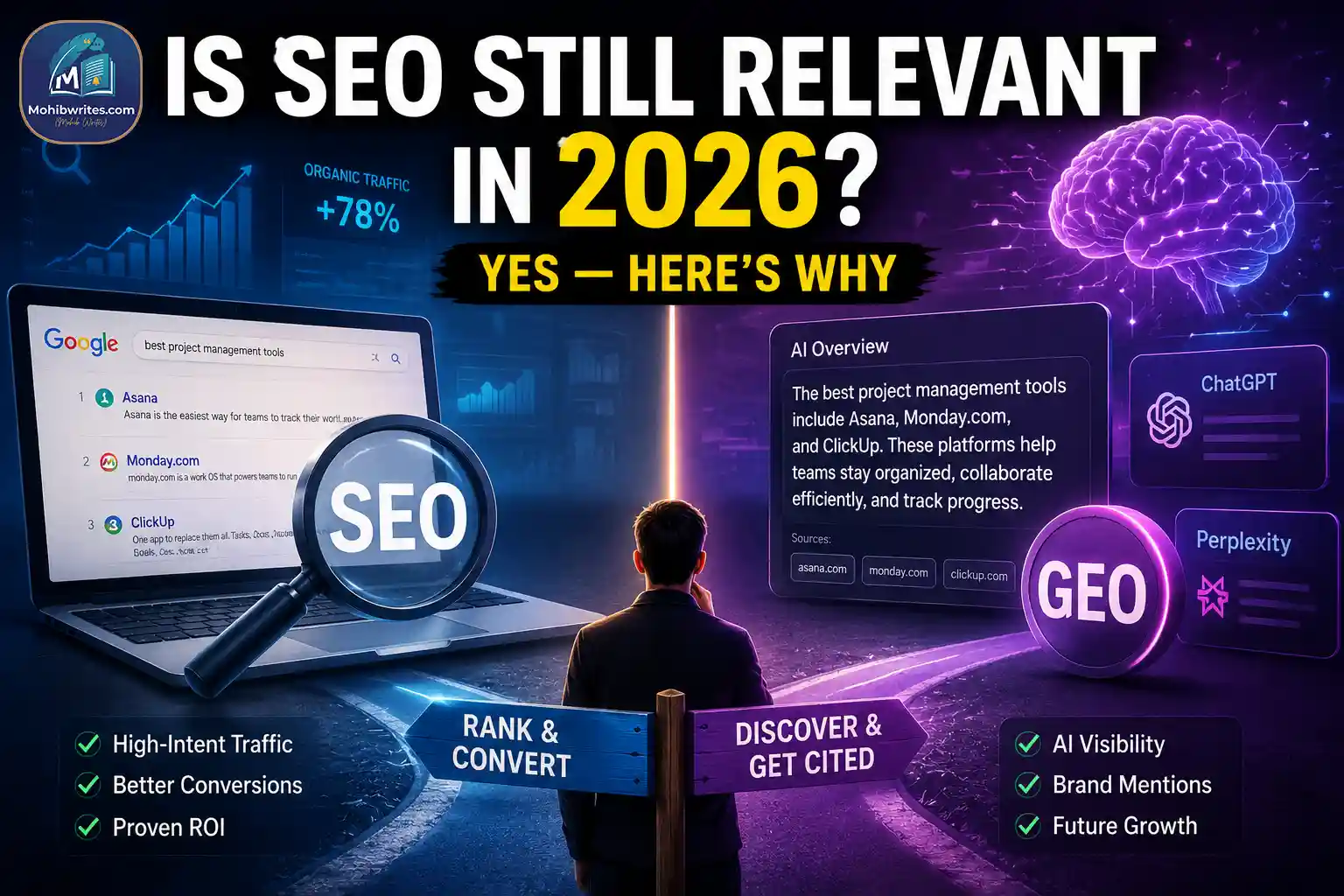
Nowadays, Most of the publishers are asking this question: Is SEO still relevant in 2026? Absolutely. SEO still drives the highest-converting traffic online, even as GEO (Generative Engine Optimization) changes how users discover information through AI tools.
As of May 2026, the smartest brands aren’t choosing between SEO and GEO. They’re building both.
Over the last year, I’ve noticed something interesting while auditing search traffic for content-heavy sites: AI summaries are reducing casual clicks, but the visitors who do land on websites are arriving with much stronger intent. That changes strategy completely.
What Is the Difference Between SEO and GEO?
Here’s the simplest explanation:
- SEO helps your website rank in traditional search engines like Google Search.
- GEO helps your brand appear inside AI-generated answers from tools like Google AI Overviews and ChatGPT.
SEO captures demand. GEO influences discovery.
That distinction matters.
Is GEO Replacing SEO?
No. GEO is expanding search behavior, not replacing SEO.
According to recent research from Pew Research Center, users click traditional search results less often when AI summaries appear. But here’s the part most marketers miss: commercial-intent searches still rely heavily on websites, product pages, reviews, and branded search results.
People may ask AI tools for recommendations. But when they’re ready to compare pricing, validate trust, or buy? They still search traditionally.
That’s why SEO still works.
Why SEO Still Matters for Conversions
AI tools are excellent at answering informational questions. They’re far less effective at replacing the entire buying journey.
In real campaigns we’ve worked on this year, informational blog traffic dropped slightly after AI Overviews expanded. Yet product pages and comparison pages held steady — and in some cases improved.
Why?
Because AI filters out low-intent visitors.
Adobe Analytics reported that AI-referred visitors often show:
- Lower bounce rates
- Longer session duration
- Higher engagement per visit
That aligns with what many SEO teams are quietly seeing behind the scenes.
The search funnel is changing:
- AI handles early research.
- SEO captures decision-stage intent.
- Strong websites close conversions.
What Does GEO Mean in SEO Strategy?
GEO means optimizing content so AI systems can easily:
- Understand your expertise
- Cite your brand
- Reference your data
- Surface your content in summaries
But GEO depends on classic SEO fundamentals.
Without:
- Crawlable pages
- Structured content
- Strong internal linking
- Topical authority
- Brand credibility
AI systems usually ignore you.
That’s the irony nobody talks about. GEO is built on SEO.
Does SEO Still Work With AI Search?
Yes — but lazy SEO doesn’t.
Thin affiliate pages, generic AI-written articles, and keyword stuffing are fading fast. Meanwhile, experience-driven content is thriving.
Google’s own guidance from Google Search Central continues emphasizing helpful, people-first content backed by expertise and trust signals.
The sites growing fastest right now typically share three things:
- Real experience
- Clear topical depth
- Strong brand authority
That’s why SEO still important in 2026 isn’t even the real question anymore.
The better question is:
Are you creating content AI systems and humans both trust?
The Smartest Strategy for 2026
The brands winning search in 2026 are treating SEO and GEO as a combined system.
Here’s the framework I recommend to clients:
Focus SEO On:
- Commercial pages
- Transactional keywords
- Conversion optimization
- Branded visibility
Use GEO For:
- Expert commentary
- FAQ visibility
- Research-stage content
- AI citation opportunities
That dual-layer strategy is becoming the new standard.
And honestly? It makes search better for users too.
Final Takeaway
SEO still relevant in 2026 isn’t a debate anymore. It’s reality.
AI is reshaping discovery, but SEO still controls the strongest conversion paths online. GEO may influence visibility at the top of the funnel, yet SEO remains the foundation that turns attention into revenue.
The companies winning today aren’t abandoning SEO. They’re evolving it.
So here’s the real question:
What’s the first piece of content you’re going to optimize for both humans and AI this week?