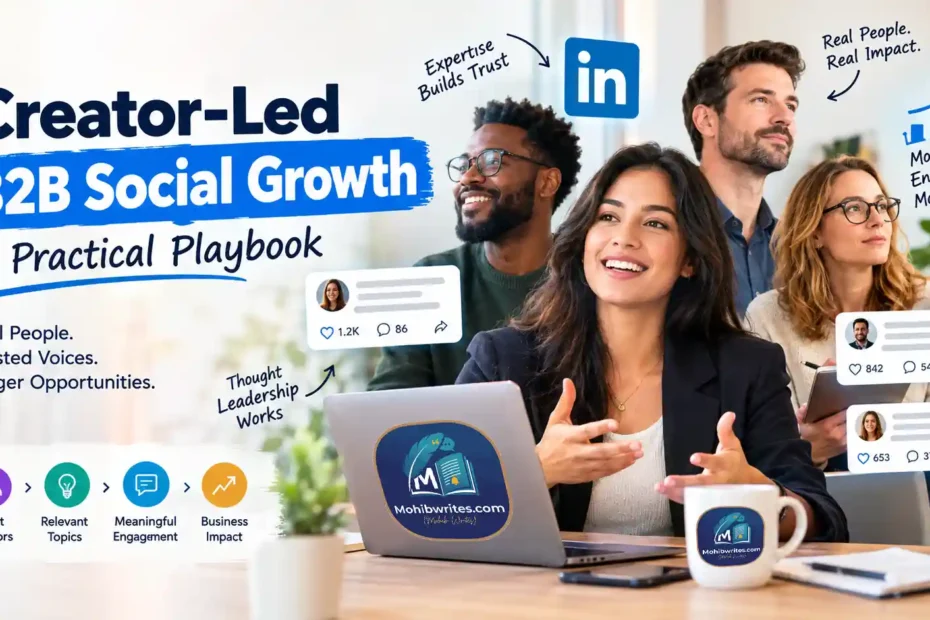
Creator-led B2B social growth uses trusted individual voices to help a company reach, engage, and build credibility with its audience. It works best when creators share expertise—not just brand messages—and when the company supports their work without scripting every word.
Why put people at the center of B2B social?
Business buyers assess risk as well as features. They look for evidence that a company understands their problems and can deliver. A practitioner, customer, or specialist can make that expertise easier to see than a stream of polished corporate announcements.
LinkedIn’s B2B research and marketing resources focus on trust, thought leadership, and the role of brand in B2B buying. That supports a useful strategic distinction: creators can build familiarity and shape consideration, but social engagement alone does not prove pipeline impact.
“Creator” also means more than an influencer with a large following. In B2B, the most valuable voice may be an employee, customer, founder, analyst, or niche expert whose knowledge matters to a specific buying group.
How to build a creator-led strategy
- Start with a buyer problem. Choose a question your audience actively faces, such as evaluating a tool, managing compliance, or changing a process. A strong topic gives creators room to explain, challenge assumptions, and share practical lessons.
- Select for credibility and relevance. Look for expertise, a distinct point of view, audience overlap, and a track record of useful conversation. Follower count can indicate reach, but it cannot establish trust or buying influence by itself.
- Give creators room to speak naturally. Set clear guardrails for accuracy, confidentiality, and disclosures. Then let the person choose examples and language. Over-scripted posts often sound like ads and weaken the very credibility the program needs.
- Build a repeatable content rhythm. Pair short posts or videos with deeper formats such as interviews, event discussions, or practical guides. Use recurring themes so audiences recognize the creator’s expertise over time. Repurpose thoughtfully; don’t publish identical copy everywhere.
How should teams measure results?
Measure outcomes at three levels:
- Reach: relevant audience growth, impressions, and share of conversation.
- Engagement: meaningful comments, saves, replies, and conversations with target roles.
- Business contribution: referral visits, qualified inquiries, influenced opportunities, and sales feedback.
Use tagged links and consistent campaign reporting where possible. Compare performance with a baseline, and ask sales teams whether conversations reflect better awareness or understanding. Treat attribution carefully: B2B buying involves multiple people and touchpoints, so a creator’s contribution may not appear as the final click.
Also: Google’s November 2024 Core Algorithm Update: What You Need to Know
Common mistakes—and a useful takeaway
Avoid choosing creators solely by audience size, treating every post as a lead-generation asset, or demanding immediate revenue from awareness work. Don’t confuse employee advocacy with forced posting; participation should feel voluntary and informed.
The strongest creator-led B2B social growth combines credible people, buyer-relevant ideas, editorial freedom, and measurement matched to the goal. Start with one audience problem and a small group of trusted voices. Learn what earns genuine discussion, then expand what works.